Oklahoma Seller Disclosure Requirements 2026: What Every Agent and Broker Must Get Right
Oklahoma seller disclosure requirements 2026 explained for agents and brokers—statutes, forms, liability risks, and common mistakes to avoid.
Brittany Brighenti
Updated May 28, 2026 · 9 min
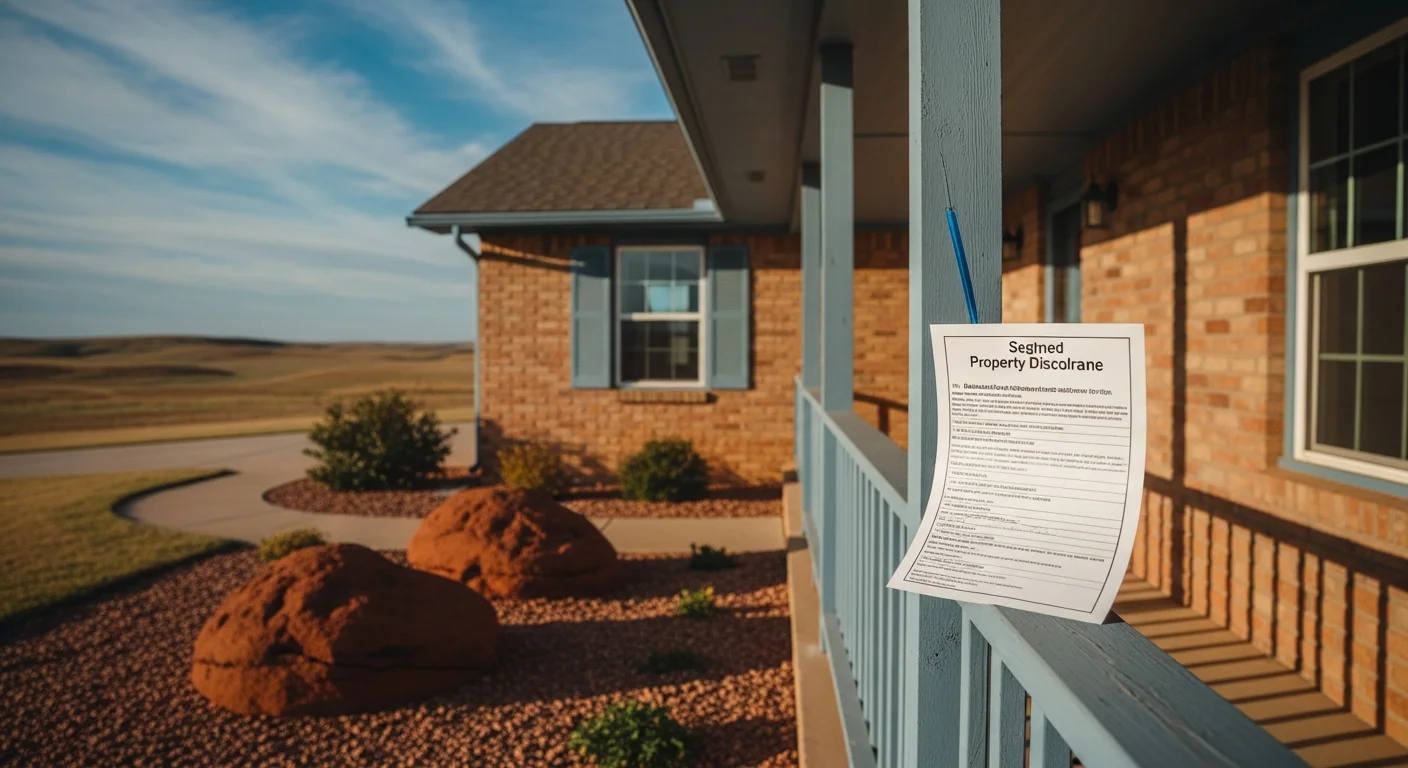
Understanding Oklahoma Seller Disclosure Requirements 2026
Oklahoma’s disclosure framework has not changed dramatically in recent years, but the consequences of getting it wrong have intensified. The Oklahoma seller disclosure requirements 2026 remain governed primarily by the Residential Property Condition Disclosure Act, codified at Title 60, Sections 831 through 839 of the Oklahoma Statutes. Every listing agent who handles a one-to-four-unit residential transaction needs to understand when the form is required, what it must contain, and how failure to deliver it exposes both the agent and the brokerage to legal risk.
The Oklahoma Real Estate Commission (OREC) oversees licensee conduct, and a disclosure failure can trigger a complaint that lands on their desk fast. Agents who treat disclosure as a checkbox exercise—rather than a substantive obligation—put themselves and their sellers in an avoidable legal position.
The Statutory Foundation: Title 60 O.S. Sections 831-839
The Residential Property Condition Disclosure Act requires sellers to provide a written disclosure statement to prospective buyers before the buyer submits an offer, or within a timeframe specified in the purchase agreement. The statute covers the physical condition of the property, known defects, environmental hazards, and certain neighborhood conditions that materially affect the property’s value or desirability.
Section 833 specifically mandates that the seller disclose all known material defects, even if the buyer has not asked about them. This is an affirmative duty, not a responsive one. The seller cannot hide behind silence.
Section 836 outlines the exemptions, which we will address below. Section 838 establishes the buyer’s right to rescind the contract if the disclosure is not timely delivered. Section 839 limits the seller’s liability to matters actually known at the time of disclosure—meaning speculation or items discovered post-closing are generally not actionable under this statute alone.
Forms and Documents Oklahoma Agents Must Use
The Oklahoma Association of REALTORS (OAR) publishes the standard Residential Property Condition Disclosure Statement, which is the form most commonly used across the state. While the statute does not prescribe a specific state-issued form number, the OAR form is designed to satisfy the statutory requirements and is widely recognized by OREC and Oklahoma courts.
Agents should be aware of the following documents related to disclosure:
| Document | Purpose | When Required |
|---|---|---|
| OAR Residential Property Condition Disclosure Statement | Satisfies 60 O.S. § 833 disclosure duty | Before buyer’s offer or per contract terms |
| Lead-Based Paint Disclosure (federal) | Required for pre-1978 homes under 42 U.S.C. § 4852d | Before buyer is obligated under contract |
| Seller’s Disclaimer Statement (OAR) | Used when a statutory exemption applies | At listing or before offer acceptance |
| OREC Complaint Form | Filed by aggrieved buyer or agent against licensee | Post-transaction if violation alleged |
The OAR form covers structural systems, roof condition, plumbing, electrical, HVAC, pest infestation, flood history, environmental hazards (including meth contamination), and zoning violations. Sellers must check “Yes,” “No,” or “Unknown” for each item. An “Unknown” answer does not relieve the seller if they actually had knowledge of the condition.
Exemptions That Apply in Oklahoma
Not every transaction requires the standard disclosure. Section 836 of the Act carves out several exemptions, and agents frequently misidentify which ones apply. The most common exemptions include transfers pursuant to court order (foreclosure, probate, divorce), transfers by a fiduciary administering an estate, transfers between co-owners, and sales of new construction where the builder provides a separate warranty.
Agents must document the exemption basis in the transaction file, not simply skip the form. A brokerage that audits files post-closing and finds neither a disclosure form nor documented exemption has a compliance gap that invites regulatory scrutiny. If you handle transactions that straddle multiple states, you will find helpful context in our breakdown of Missouri seller disclosure requirements for comparison.
The as-is designation does not create an exemption. This is perhaps the most persistent myth in Oklahoma residential practice. A seller may sell a property as-is regarding repairs, but the affirmative duty to disclose known material defects survives an as-is clause.
Consequences of Non-Compliance: What Agents Risk
Failing to ensure proper disclosure delivery exposes agents to three distinct categories of risk: civil liability, regulatory action, and deal cancellation.
On the civil side, a buyer who discovers undisclosed defects after closing can pursue a claim against the seller and, in some cases, against the listing agent who knew or should have known about the defect. Oklahoma courts have held that agents owe a duty of honesty and disclosure that runs parallel to—but is not identical to—the seller’s statutory duty. Under 59 O.S. § 858-312, licensees must disclose material facts that they know or reasonably should know.
Regulatory penalties from OREC can include license suspension, revocation, fines up to $5,000 per violation, and mandatory continuing education. OREC investigates complaints related to misrepresentation and disclosure failures under their disciplinary authority established in the Oklahoma Real Estate License Code.
The buyer’s rescission right under Section 838 is the most immediate operational risk. If the disclosure was never delivered—or was delivered late—the buyer may cancel the contract. This kills deals, and it kills them at the worst possible time: after the seller has mentally moved on and the agent has invested weeks of work.
Common Mistakes Agents Make With Oklahoma Disclosures
Five errors show up repeatedly in OREC complaints and transaction audits. Each one is avoidable with proper systems.
First, agents allow sellers to leave the form entirely blank or mark every item “Unknown.” While “Unknown” is a valid answer for genuinely uncertain conditions, a blanket “Unknown” response pattern raises a red flag. It suggests the agent did not walk the seller through the form or that the seller is evading the duty. Courts and regulators view a pattern of “Unknown” answers skeptically when the seller occupied the property for years.
Second, agents deliver the disclosure after the buyer is already under contract with no rescission window built in. The statute contemplates delivery before the offer or with a contractual provision giving the buyer time to review. Delivering it at closing—or worse, never delivering it—creates a ticking legal time bomb.
Third, listing agents fail to update the disclosure when new information surfaces during the transaction period. If a home inspection reveals a previously unknown issue and the seller becomes aware of it, the disclosure should be amended. The duty is ongoing until closing, not a one-time obligation.
Fourth, agents confuse federal lead-based paint disclosure requirements with state disclosure requirements and assume one form covers both. These are separate obligations with separate penalties. The federal disclosure carries fines up to $19,507 per violation under updated HUD enforcement guidelines.
Fifth, agents representing exempt transactions fail to document the exemption. Simply not providing a form leaves no paper trail. A brief written notation identifying the applicable exemption under Section 836 protects the agent if the transaction is later questioned. For more on how missed paperwork derails transactions, see our analysis of where deals break down.
What Brokers Need to Audit and Enforce
Brokers carry supervisory liability under Oklahoma law. OREC Rule 605:10-9-4 establishes that the designated broker is responsible for ensuring agents within the brokerage comply with disclosure requirements. A pattern of violations within a single office can result in brokerage-level discipline.
| Audit Item | What to Look For | Frequency |
|---|---|---|
| Disclosure form present in file | Signed, dated, complete—no blank sections | Every closed file |
| Exemption documentation | Written basis citing Section 836 | Every exempt transaction |
| Delivery timing | Date of delivery vs. date of contract execution | Every closed file |
| Lead-based paint compliance | Separate federal form for pre-1978 properties | Every applicable file |
| Disclosure updates | Amendments added if new defects discovered mid-transaction | Spot-check quarterly |
Brokers should build a quarterly compliance review into their operations. Waiting until an OREC complaint arrives to discover a systemic issue puts the entire brokerage at risk. The monthly compliance audit framework we published earlier this year provides a template that works well for Oklahoma brokerages of any size.
A broker who can demonstrate a documented audit process has significantly stronger footing in any OREC disciplinary hearing. The Commission looks at whether the brokerage had systems in place—not just whether a single agent made an error.
Practical Workflow: Getting Disclosure Right Every Time
The most effective agents build disclosure delivery into their listing appointment workflow, not their contract-to-close process. Hand the seller the form at the listing presentation, explain each section, and set a deadline for return that precedes the first showing.
When the completed form comes back, review it critically. If a seller discloses a material issue, discuss it openly. A disclosed defect is far less dangerous legally than a concealed one. Buyers who receive honest disclosure before making an offer rarely sue later; buyers who feel deceived almost always do.
Store the signed, dated disclosure in your transaction management system immediately. If you are managing multiple active files simultaneously—and most Oklahoma agents are—having a systemized approach to tracking disclosure status across all listings prevents the kind of oversight that leads to complaints. Our earlier post on tracking multiple active deals directly addresses this operational challenge.
Oklahoma Seller Disclosure Requirements 2026: Final Guidance for Agents
The rules have not changed substantially this year, but enforcement intensity has. OREC has increased its investigative staff and is processing complaints faster than in previous cycles. Agents who relied on informal practices in 2024 should tighten their systems for 2026.
Oklahoma seller disclosure requirements 2026 demand a proactive, documented approach that starts at listing and continues through closing. If your brokerage does not have an automated workflow that flags missing disclosures, tools like Britanni AI can catch those gaps before they become regulatory problems—giving you one less reason to lose sleep over a file that closed six months ago.
Brittany Brighenti
Co-founder at Britanni AI. Managed 3,000+ transactions as a senior TC before building Britanni.
Related articles
Oklahoma Agency Disclosure Requirements 2026: What Every Agent and Broker Must Get Right
Brittany Brighenti · Jun 6, 2026
Alaska Seller Disclosure Requirements 2026: What Every Agent and Broker Must Know
Jack Brighenti · May 31, 2026
Vermont Seller Disclosure Requirements 2026: What Every Agent Must Get Right
Jack Brighenti · May 31, 2026