Ohio Seller Disclosure Requirements 2026: What Every Agent and Broker Must Get Right
Ohio seller disclosure requirements 2026 explained with specific forms, statutes, and liability risks every licensed agent needs to know.
Brittany Brighenti
Updated May 25, 2026 · 9 min
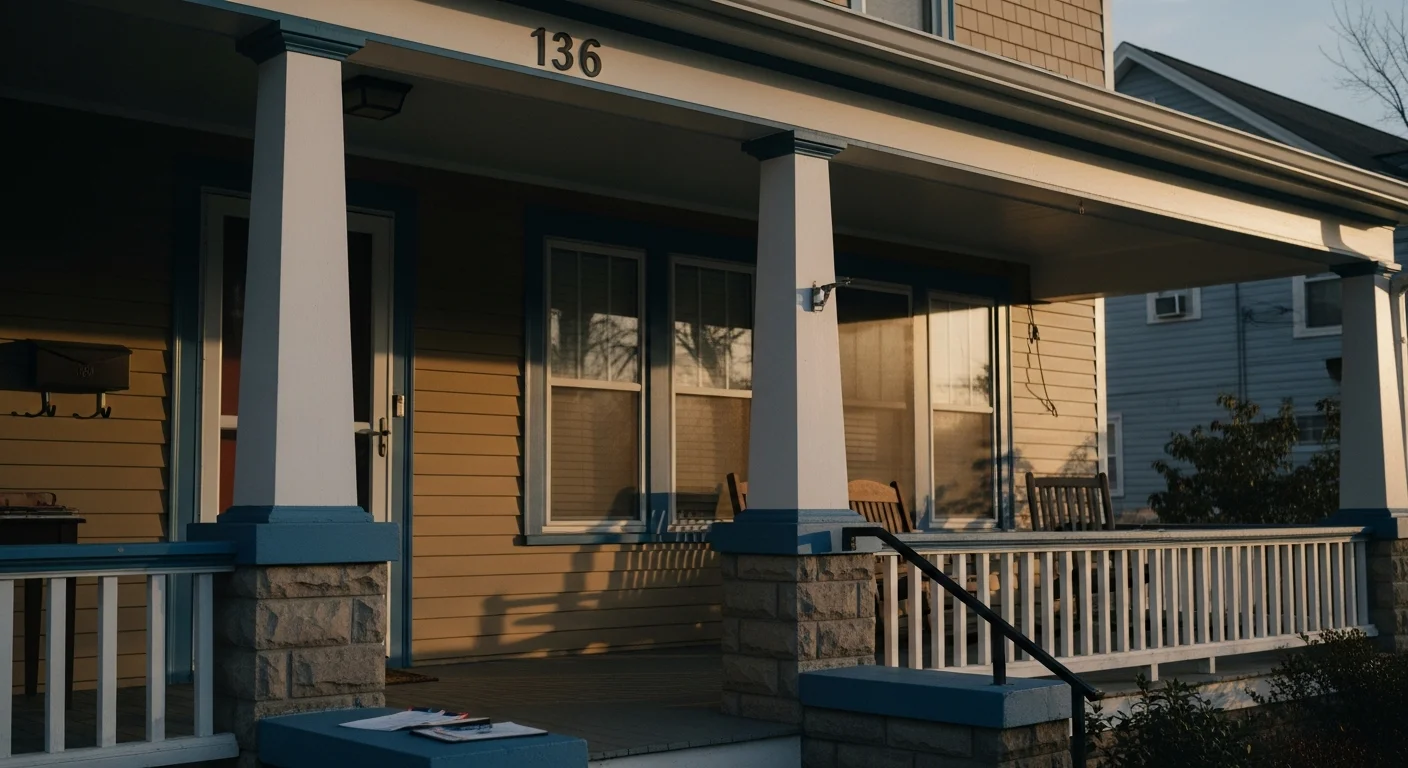
Ohio Seller Disclosure Requirements 2026: What Every Agent and Broker Must Get Right
Ohio seller disclosure requirements 2026 remain one of the most misunderstood compliance obligations in the state’s residential transaction process. Agents who treat the Residential Property Disclosure Form as a formality rather than a legal instrument expose themselves, their brokers, and their clients to real liability. This post breaks down what the statute actually demands, how the relevant forms work, and where agents consistently get it wrong.
The Statute Behind the Requirement
Ohio Revised Code Section 5302.30 establishes the seller’s obligation to deliver a completed disclosure form to prospective purchasers before a purchase agreement is signed or, at the latest, as a condition of the agreement itself. The statute applies to transfers of residential real property containing one to four dwelling units. It explicitly names the form that must be used and sets out the categories of information the seller must address.
The Ohio Division of Real Estate and Professional Licensing, housed within the Ohio Department of Commerce, enforces the licensing side of compliance. Agents who facilitate transactions without ensuring proper delivery of the disclosure form risk disciplinary action under ORC 4735.18, which governs grounds for suspension or revocation of a real estate license. The statutory framework has not changed substantively for 2026, but enforcement attention has increased following several high-profile complaints filed in late 2025.
The Specific Forms Ohio Agents Must Use
Ohio’s mandated form is the Residential Property Disclosure Form, sometimes referenced by its statutory origin in ORC 5302.30. This is not a form agents can substitute with a brokerage-created alternative or an out-of-state template. The form requires the seller to disclose known conditions related to water supply, sewer systems, roof condition, structural issues, environmental hazards, zoning violations, and more.
In addition to the state-mandated disclosure, agents working within the Ohio REALTORS framework will encounter the Ohio REALTORS Residential Property Disclosure Form, which tracks the statutory requirements closely but may include additional advisory language. The distinction matters: the statutory form is what the law requires, and any supplemental brokerage forms do not replace that obligation.
For transactions involving properties in certain municipalities, additional lead-based paint disclosures under federal law (per 42 USC 4852d) remain mandatory for homes built before 1978. This is a separate federal requirement and does not excuse the state form. Agents sometimes conflate the two, thinking one covers the other.
What Happens When Agents Fail to Comply
The consequences of noncompliance fall into three categories: civil liability, rescission rights, and licensing discipline.
Under ORC 5302.30(G), if a seller fails to provide the disclosure form before the purchase agreement is executed, the buyer may rescind the agreement. The rescission window is short but real, and it creates deal-killing uncertainty for all parties. Agents who allow a transaction to proceed without timely delivery of the form are setting up a rescission claim.
Civil liability is the bigger risk for agents personally. If a buyer later discovers a material defect that was known to the listing agent but not disclosed, the agent faces potential liability under ORC 4735.67 and common law fraud theories. Courts in Ohio have held that an agent’s knowledge of material defects—gained through observation, prior transactions with the same property, or the seller’s verbal admissions—can give rise to an independent duty to disclose, separate from the seller’s obligation.
On the licensing side, the Ohio Division of Real Estate and Professional Licensing can impose fines, require continuing education, suspend a license, or revoke it entirely. The Division has publicly noted an uptick in disclosure-related complaints, and its enforcement actions page reflects this trend.
Common Mistakes Agents Make With Seller Disclosures
Five errors show up repeatedly in disciplinary files and litigation across Ohio. Each one is preventable.
First, agents allow sellers to check “unknown” on items the seller clearly has knowledge about. When a seller has lived in a home for fifteen years and marks “unknown” for basement water intrusion, that answer is implausible on its face. Agents have a duty to advise sellers to answer honestly, and failing to push back on obviously evasive responses can be treated as facilitation of misrepresentation.
Second, agents deliver the disclosure form after the purchase agreement is fully executed, missing the statutory timing requirement. ORC 5302.30 is explicit: the form must be delivered before or at the time of the agreement. Delivering it at the inspection period or at closing does not satisfy the statute and preserves the buyer’s rescission right.
Third, listing agents fail to retain a signed acknowledgment of receipt from the buyer or buyer’s agent. Without documentation of delivery, the listing side cannot prove compliance if challenged. The form itself includes a receipt section, and leaving it blank is an unforced error.
Fourth, agents confuse the seller disclosure with the agent disclosure of agency relationships required under ORC 4735.58. These are distinct obligations with distinct forms, distinct timing requirements, and distinct consequences for noncompliance. Agents who treat them as interchangeable misunderstand both.
Fifth, agents in dual-agency or limited-service arrangements assume the seller’s responsibility to complete the form somehow shifts to the buyer’s agent or the transaction coordinator. It does not. The obligation is the seller’s, and the listing agent’s role is to ensure it gets done and delivered properly.
What Brokers Need to Audit and Enforce
Brokers carry supervisory liability under ORC 4735.18(A)(6) for the actions of their affiliated agents. A broker who does not audit disclosure compliance across the brokerage is accumulating risk with every closed file.
At minimum, brokers should be verifying three things in every residential transaction file. First, that the Residential Property Disclosure Form is present, completed in full, and signed by the seller. Second, that the delivery receipt is signed by the buyer or buyer’s agent with a date that precedes or matches the purchase agreement date. Third, that no agent notes or communications in the file contradict what the seller disclosed on the form.
Brokers should also establish a written policy on how agents handle seller reluctance. When a seller refuses to complete the form—or insists on marking everything “unknown”—the agent needs a protocol. That protocol should include written documentation of the advice given, the seller’s response, and any decision by the agent to proceed or withdraw. Without this paper trail, the broker inherits exposure from the agent’s judgment call.
Quarterly file audits focused specifically on disclosure timing and completeness are the most effective internal control. Waiting until a complaint arrives to review a file means the damage is already done. Brokers who implement transaction management systems with built-in compliance checkpoints reduce their exposure significantly.
Exemptions That Agents Misapply
ORC 5302.30(B) provides specific exemptions from the disclosure requirement. Transfers by a fiduciary in the course of administering an estate, transfers resulting from a court order, transfers by a government entity, and transfers to or from a financial institution holding the property through foreclosure are among the exemptions. New construction sold by a builder who has never occupied the property is also exempt.
Agents frequently misapply these exemptions. The most common error is assuming that any estate sale qualifies for the fiduciary exemption. It does not automatically apply simply because an executor is involved—the exemption applies when the fiduciary has no personal knowledge of the property’s condition. If the executor lived in the home or managed it for years, the exemption argument weakens significantly.
Another common misapplication involves bank-owned properties. While the financial institution itself is exempt, if the bank lists the property through a standard listing agreement with a brokerage, the listing agent still has duties related to known defects under ORC 4735.67. The seller’s exemption from the form does not immunize the agent from independent disclosure obligations based on the agent’s own knowledge.
How the 2026 Enforcement Environment Is Shifting
The Ohio Division of Real Estate and Professional Licensing signaled in its 2025 annual report that disclosure violations would receive heightened scrutiny in 2026. This follows a pattern of buyer complaints centered on water damage, foundation issues, and unpermitted renovations—all categories that should appear on a properly completed disclosure form.
Agents working in Ohio’s metropolitan markets—Columbus, Cleveland, Cincinnati—are seeing tighter buyer attorney involvement during due diligence, and those attorneys know how to spot a disclosure deficiency. The days of a cursory glance at the form are over for buyers’ representatives, which means listing agents need to be equally rigorous on the front end.
For agents managing multiple transactions simultaneously, tracking disclosure delivery dates and completion status manually invites errors. Tools like Britanni AI that flag missing or incomplete disclosure forms before a transaction reaches contract can eliminate the most common timing failures. Integrating compliance checkpoints into your workflow is not about automation for its own sake—it is about making sure no file slips through with a rescission-ready defect.
Ohio seller disclosure requirements 2026 demand the same attention agents give to pricing strategy or inspection negotiations. The agents and brokers who treat the Residential Property Disclosure Form as a core transaction document—rather than a box to check—will avoid the complaints, the rescission claims, and the licensing hearings that catch their less disciplined competitors. Get the fundamentals of your transaction workflow right, and disclosure compliance becomes a habit rather than a hazard.
Brittany Brighenti
Co-founder at Britanni AI. Managed 3,000+ transactions as a senior TC before building Britanni.
Related articles
Ohio Agency Disclosure Requirements 2026: What Every Agent and Broker Must Get Right
Brittany Brighenti · Jun 1, 2026
Alaska Seller Disclosure Requirements 2026: What Every Agent and Broker Must Know
Jack Brighenti · May 31, 2026
Vermont Seller Disclosure Requirements 2026: What Every Agent Must Get Right
Jack Brighenti · May 31, 2026